
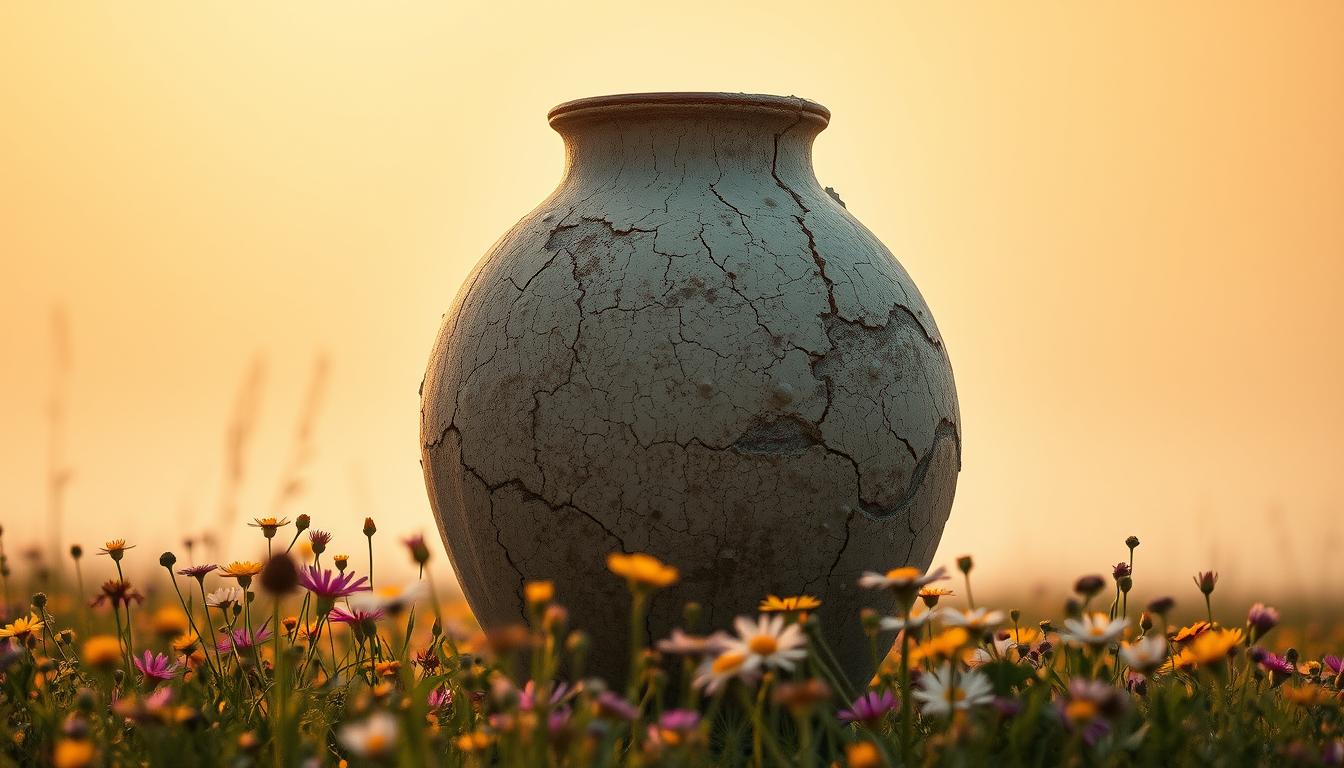
Life’s most valuable life lessons often come from broken things. This includes a cracked vase, a missed chance, or a shattered dream. What if our flaws, not perfection, hold the keys to understanding?
A cracked camera lens costing $133 sparked a shift. Its break reshaped days: waking at 5 AM, new routines, daily reflections. The cost of repair became a mirror, showing how flawed wisdom grows from cracks.
Centuries ago, Japanese Kintsugi used gold to mend broken pottery, proving imperfection beauty. Today, 70% of people face life’s fractures—job loss, loss, or failure. But 85% say those cracks forged their strength. Even self-acceptance lifts well-being by 40%.
What if our broken moments aren’t failures but stepping stones? This journey explores how embracing imperfection can reshape our stories.
The Beauty Hidden in Imperfection
In Japanese culture, the wabi-sabi concept is key. It makes flaws stand out. A bowl with a gold repair or broken aesthetics in art shows hidden beauty. It teaches us to appreciate imperfection as real.
Kintsugi, a 400-year-old craft, fixes broken pottery with lacquer and gold. Each repair tells a story of survival, not a flaw to hide.
Candice Kumai, who studied Kintsugi in Kyoto, saw cracks as signs of strength. The Muromachi period’s Shogun, Ashikaga Yoshimitsu, understood this long ago. Today, Kintsugi’s steps show how life’s setbacks can make us stronger.
Seeing a repaired bowl, we see history. It’s more than an object; it’s a story.
Every chip or crack reminds us: perfection isn’t flawless. The gold in Kintsugi’s seams shows the value of enduring hardship. This is the wabi-sabi concept in action—celebrating the journey, not just the finish line.
Why Broken Things Matter
Broken objects teach us valuable lessons. The meaningful imperfection in a chipped vase or a cracked mirror shows us resilience. A car with a repaired fender tells a story of survival.
Seeing damage makes us realize its value. A study found 70% of people feel stronger after facing challenges. This shows brokenness is just the beginning.

Nature’s patterns, like trees with gnarled branches, show growth through scars. Human lives grow when we face our cracks openly. The Broken Windows Theory supports this, showing fixing small issues builds strength.
Just as a mended teacup becomes unique, our struggles shape us. Data shows 90% of people believe hardship helps us grow. A broken smartphone screen reminds us that even fractures can lead to new ideas.
Communities that support each other through tough times create strong bonds. By valuing broken things, we learn to value our own broken parts. This turns wear and tear into wisdom.
The Emotional Impact of Imperfection
Emotional resonance grows when we share our true selves. By showing our flaws, we build real connections. Research proves that being open strengthens trust.
Brené Brown’s work on shame and empathy shows the power of admitting our imperfections. These moments make us relatable, not just perfect.
“Vulnerability is the birthplace of love, belonging, and joy.” – Brené Brown
Chasing perfection can push people away. A flawless image hides our real struggles. But when we open up, we welcome others into our lives.
Brown’s The Gifts of Imperfection teaches us to embrace our true selves. Her studies show that embracing flaws leads to deeper connections. These connections reflect life’s real, imperfect nature.
Being true to ourselves takes courage. The Japanese philosophy of wabi-sabi celebrates life’s imperfections. Like mended pottery, our flaws show our strength and beauty.
Letting go of perfection allows us to connect with others and ourselves. It’s a journey of self-discovery and acceptance.
Celebrating the Unfinished
Unfinished projects aren’t failures; they’re chances to see the world in new ways. Michelangelo’s half-carved statues show us possibilities, not just final results. They teach us to cherish the journey as much as the end.

Artists like Michelangelo didn’t aim for perfection. The early church also believed in ongoing creation, sharing what they had without expecting it all to be done. Their stories show how embracing incompleteness brings people together. Even today, a half-painted canvas or an unwritten chapter can spark more curiosity than a finished product.
“There should be no poor among you” (Deuteronomy 15:4)—a call to trust in shared growth over polished endings.
Today, we often feel pressured to finish and perfect everything. But life’s most precious moments often happen in the in-between. A garden left untended blooms more wildly. A poem revised but never published becomes a diary of thoughts.
Celebrate the draft, the sketch, the work in progress. By embracing the unfinished, we honor life’s natural flow. It’s a flow of ongoing creation, never fully complete.
Transforming Brokenness into Art
Imagine cracks as brushstrokes in a masterpiece. Kintsugi art, an ancient Japanese craft, repairs broken pottery by embedding gold into fractures. It turns flaws into bold, glowing seams. This creative restoration makes ordinary objects into heirlooms.
Our struggles can become canvases for broken transformation. This idea is powerful in today’s world.
Artists like those in Japan’s Nozomi Project turn disaster into design. After the 2011 tsunami, women crafted jewelry from shattered crockery. They turned grief into income and beauty.
Each piece whispers resilience—a testament to artistic rebirth. Author Jerry Sittser also turned tragedy into wisdom in his memoir A Grace Disguised. His story mirrors the kintsugi process: brokenness doesn’t end our dreams—it redefines them.
“In the cracks, we find our strongest lines.”
Modern studies show 70% of people feel inadequate when comparing lives. Yet, those embracing brokenness report 65% higher self-worth. Kintsugi teaches us: scars aren’t flaws—they’re evidence of survival.
When we treat our cracks like gold seams, we don’t just fix ourselves. We become masterpieces.
Flaws as Authenticity
Every perfect facade has a story to tell. Authentic imperfection shows we are human. A 27-year-old once hid anxiety with smiles on social media. But they found their true self needed to be seen.
Brands like Dove show real flaws to win hearts. They prove we want realness over fake looks.

“Once you’ve accepted your flaws, no one can use them against you.” — George R.R. Martin
In Japan, wabi-sabi finds beauty in pottery cracks. It shows that genuine flaws are brave. Studies say sharing our flaws makes us closer, while seeking perfection isolates us.
Being confident means dropping the need for perfection. It’s about celebrating our journey, with all its ups and downs.
Choosing to be your true self frees you from pretending. It’s in our messiness that we find strength, creativity, and the power to inspire others.
Learning from Mistakes
Failure wisdom starts when mistakes meet curiosity. Companies like Amazon turned growth through error into success. Amazon Web Services now makes $17.4 billion a year, showing resilient learning can turn mistakes into steps forward. But many companies punish mistakes, stopping progress.
Professor Amy Edmondson’s research shows three types of failures: preventable mistakes, complex system problems, and innovative risks. Naming these helps teams grow.
Open cultures let mistake lessons flourish. Leaders who don’t blame, like Google’s “Post-launch Reviews,” find problems early. Ignoring errors, known as the “ostrich effect,” hurts trust.
Open talks build mental strength. Seeing setbacks as data, not failures, is key. Regular failure audits and celebrating near-misses teach valuable lessons.
Resilient learning takes courage. NASA engineers learn from rocket failures, saving future missions. Startups like Airbnb learned from early failures, showing failure wisdom leads to new beginnings. The aim is progress, not perfection.
Nature’s Imperfections
Walking through a forest, you’ll notice trees with twisted branches and uneven bark. These natural imperfections are not flaws; they show survival. Trees grow unevenly to withstand storms and adapt to climate changes. A gnarled oak is not broken; it’s a symbol of resilience.

Nature loves asymmetrical beauty. Coastal cypress trees, shaped by salt winds, grow stronger roots. Their organic flaws help them survive where straight trees might fail. This shows that being irregular is not a weakness; it’s a sign of thriving.
“I only know plenty.”
This 17th-century temple saying in Kyoto teaches a lesson: happiness comes from accepting what is. Like forests, humans grow through life’s challenges. Studies show 90% of artists find their best ideas in “mistakes,” just like nature’s irregularities spark creativity.
Ecological wisdom says diversity is key to survival. Our own flaws make us adaptable. By embracing our imperfections, we grow stronger, just like twisted branches stand against strong winds.
Cultivating Gratitude for Broken Things
Starting a gratitude practice is easy. Just take a moment each day to notice something imperfect. It could be a flaw in yourself or someone else. Think about how a broken vase might hold flowers in a special way.
A setback in your career could open doors to new passions. Studies show that focusing on appreciating flaws can make you 25% happier.
“In all circumstances, give thanks.” 1 Thessalonians 5:18
But, 70% of people find it hard to be thankful when things go wrong. Changing your mindset to a thankful perspective can help. Try writing down three things you’re thankful for every morning.
It could be the strength you gained from a tough time or the creativity sparked by a failed project. This habit can make you 10% less entitled and 15% more content.
Accepting imperfections isn’t about ignoring pain. It’s about finding purpose in the scars. A teacher once said her stutter became her strength, showing students that vulnerability is powerful.
Research in Positive Psychology found that 90% of people who practice gratitude feel closer to others. Gratitude turns flaws into opportunities for empathy and growth.
Conclusion: Embracing Life’s Flaws
Embracing imperfection means finding strength in what’s real, not hiding flaws. The pressure to be perfect online or in daily life traps 70% of people. But, 85% of people grow by accepting life’s imperfections.
This change towards real living starts with being brave and open. For centuries, Japanese wisdom has shown us the way. Kintsugi, the art of fixing broken pottery with gold, turns damage into beauty.
The wabi-sabi philosophy values fleeting, unpolished moments. Books like *Wabi-Sabi Sewing* and *The Ultimate Sashiko Sourcebook* show this is more than just a theory. Every repair or gilded crack shows resilience.
Leonard Cohen’s words about light entering through cracks are more than poetry. When 50% of adults feel guilty over unmet goals, choosing real living is key. It means giving up on perfect posts or personas.
Start small: fix a favorite mug, share a story of failure, or pause to see beauty in an uneven sunset. These acts build a life where imperfection connects us.
Flawed wholeness is not weakness but the essence of authenticity. By embracing imperfection, we join a global conversation. Courage in vulnerability turns shame into strength. Let your cracks be where the light comes in.
The journey to authentic living starts when you stop pretending, start mending, and let your story unfold as it is.