
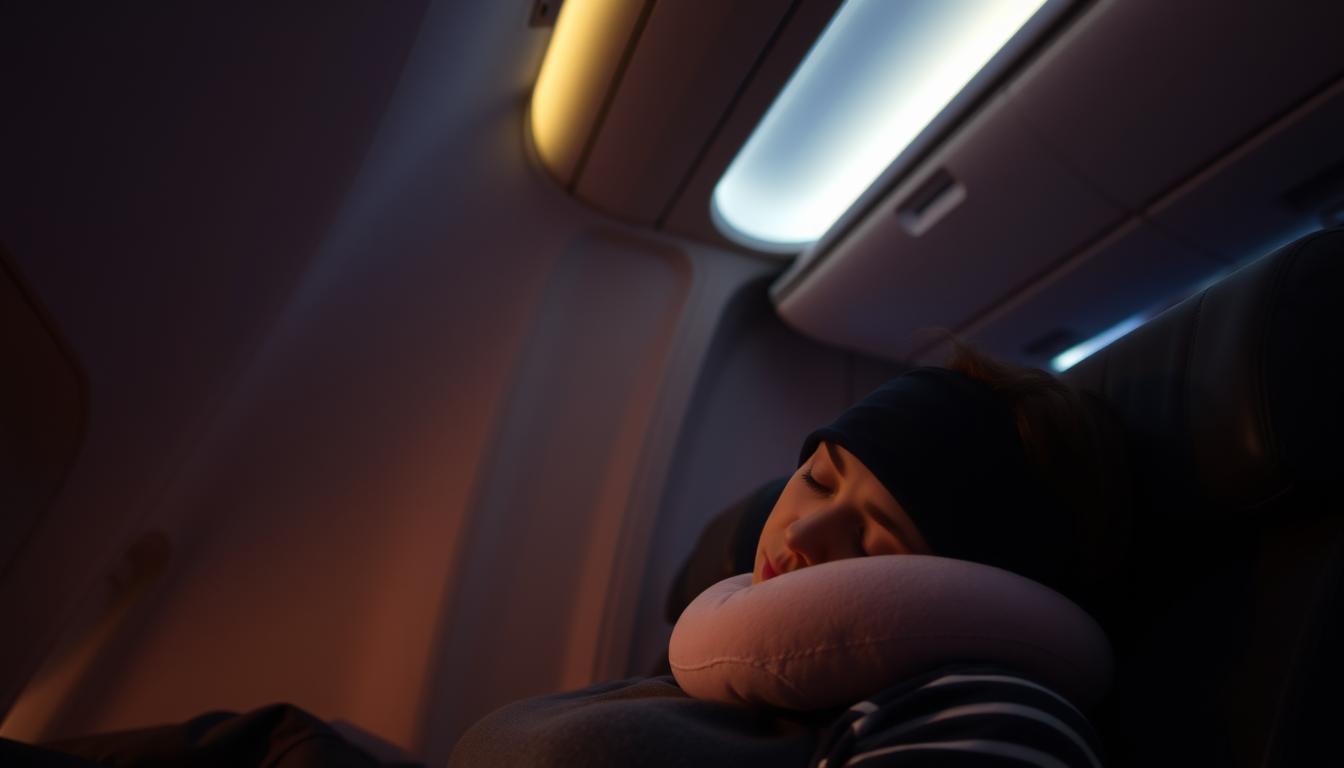
Getting quality sleep on long flights can seem like a dream. Airplane cabins are often too dry and noisy. Even seats with more legroom and direct flights are not enough for many.
Over 60% of planes have extreme temperature swings. And 15% of travelers use sleep meds. But, there’s a way to overcome these challenges.
Travel sleep hacks can help a lot. Wearing warm socks can add 32 extra minutes of sleep. Choosing flights at 7 p.m. or 11 p.m. for Europe trips is also smart.
Simple steps like avoiding caffeine 14 hours before boarding help. Using U-shaped pillows can also reduce head movement. This guide shares strategies from flight crews and studies to improve your sleep on planes.
Hydration, light management, and smart packing can turn cramped seats into beds. These tips work in any seat, ensuring you’re ready to explore when you land. Each tip is tested to help you sleep better on flights.
Understanding the Importance of Sleep During Travel
Sleep is key when you travel. It keeps you healthy and alert. Crossing time zones can mess up your circadian rhythm, leading to jet lag. Dr. Jamie Zeitzer says a bit of sleep deprivation before flying can help you sleep better in the air.
“Prioritizing sleep over onboard meals transformed my long-haul trips,” shares travel writer Kristin Luna, who’s explored 130+ countries. “Small adjustments make a big difference.”
Not getting enough sleep can make you feel tired and grumpy. Studies show 75% of people feel worse flying eastward. Jet lag can make you feel tired for days or even weeks.
Getting a few hours of sleep on the plane can help your body adjust. By starting to adjust your sleep before flying, you can avoid feeling jet-lagged. Simple steps like changing your bedtime or using light wisely can help you adjust faster.
Quality sleep on the plane is not just a luxury. It’s a smart way to stay sharp and enjoy your trip from start to finish.
Choosing the Right Flight
When looking for the best flights for sleeping, start with overnight flights. Choose routes that match your sleep cycle, like red-eye flights that arrive in the morning. Booking tips suggest flights that leave late in the evening to align with your sleepiness.
Window seats offer support by leaning against the cabin wall. Studies show sitting near the front reduces turbulence. Front seats also avoid the jolts felt in back rows, as pilots have noted. Exit rows provide extra legroom, which is great for long flights.

“You could be standing at the front and feel nothing, and down the back they’re bouncing all over the place.”
Use apps like SeatGuru or airline seating charts to compare seats. Look for seats with adjustable headrests and avoid bulkhead rows for better legroom. Budget travelers can often upgrade seats at check-in for a small cost. Booking early can help you get the best seats.
Think about the flight timing and seat choice together. Night flights with window seats create a cozy space. Airlines like Delta and JetBlue now mark “sleep-friendly” seats on their platforms. A good start to your journey means better rest and fewer travel issues.
Preparing for Your Journey
Getting ready for your flight starts days before you leave. Sleep experts like Jamie Zeitzer suggest adjusting your sleep schedule. Stay up an hour later the night before and wake up early on the day of your flight.
This sleep adjustment before flying helps your body adjust to the plane’s environment. A good travel sleep preparation routine includes wearing warm socks. Studies show this can improve sleep by 7.6%. Also, avoid screens to prevent melatonin suppression.
At the airport, focus on airport relaxation. Use lounge spaces for stretching or meditation. Michelle Joy suggests a pre-boarding routine: brush teeth, moisturize, and wear cozy layers.
Don’t forget to pack a neck pillow and noise-canceling headphones. These can block the 85-decibel cabin noise. Wendy Helfenbaum recommends choosing a window seat for stability during sleep. Erin Carey suggests using the Timeshifter app to plan melatonin timing.
Decline in-flight caffeine and alcohol. Instead, choose herbal tea. A pre-flight checklist should include packing familiar items like a weighted blanket or lavender-scented eye mask. Smells like lavender can boost deep sleep. By following these steps, your journey becomes a smooth part of your rest plan.
Dress for Comfort
Choosing the right comfortable travel clothes is key for a good flight nap. Go for breathable fabrics like cotton or moisture-wicking synthetics to stay dry and cool. Your travel outfit for sleeping should be flexible, avoiding tight materials that restrict movement.
Think of your clothes as a portable climate system. Layering for flights helps you adjust to the changing cabin temperatures. A long-sleeve base layer with a light jacket or scarf is better than a thick sweater.
“Layering adapts to cabin swings. Your airplane sleep attire becomes your armor against the cold,” advises a 20-year veteran flight attendant.

Temperatures in airplane cabins can change by 10+ degrees during a flight. Start with fitted leggings or compression socks to keep warm and improve circulation. Wool-blend socks can even boost sleep efficiency by 7.6%.
Top layers like a hoodie or lightweight puffer vest add warmth without bulk. Avoid synthetic blends that trap sweat. Instead, choose merino wool or bamboo fabrics.
Footwear is important too. Wear slip-on slipper-style shoes to improve circulation and remove them for deep sleep. Economy seats are only 17 inches wide, so avoid loose sweatpants. Choose stretchy, form-fitting materials that move with you.
A 2023 study found that 60% of travelers sleep better in layered outfits. Comfort is more important than style when it comes to your flight clothes. Your look after the flight is less important than your rest during it.
The Power of Neck Pillows
Getting the right neck support for flights is vital to avoid stiffness on long trips. A good neck pillow helps keep your spine aligned, even in tight seats. Look into travel pillow types like U-shaped, J-shaped, or memory foam to find what works best for you.
U-shaped pillows, like those from Blissy, keep your chin up to prevent your head from dropping. Inflatable pillows let you adjust how firm they are. Studies show these designs help you sleep better by keeping your neck stable.
“A U-shaped pillow with chin support reduces head movement by 40%,” a study in the Journal of Travel Medicine found. This makes your airplane neck comfort better and helps you feel less sore in the morning.
Choose materials like memory foam for a snug fit or silk to avoid irritation. Blissy’s OEKO-TEX certified pillows are great for safety and breathability. Place the pillow under your chin, not just against your neck, for even pressure.
Try to sit by a window if you can, but the right best travel pillows can make middle seats comfortable too. Pick pillows that are easy to carry without adding bulk to your bag.
Pro tip: Try out pillows before flying. Lay flat to see how they fit your body. Choose firmness for sitting up and softness for lying down. A comfy neck today means fewer aches tomorrow.
Noise Management Techniques
Engine hums and cabin chatter can make flying hard to sleep. Modern airplane noise reduction tools help. A plane’s engines are as loud as a vacuum cleaner, making noise-cancelling for flights key.
Start with over-ear headphones from brands like Bose or Sony. They block up to 80% of engine sounds. For those on a budget, foam earplugs work well. They block high-pitched sounds but let safety announcements through.
Use in-flight sound management strategies with your gear. Download playlists labeled as audio sleep aids. These often include pink noise or rainfall sounds.
A 2023 study showed pink noise can help you fall asleep 38% faster. Apps like Noisli or Calm offer mixes that mask noise. Make sure devices pause during safety announcements.
“Choose one song or playlist for every flight—your brain will begin to associate this soundtrack with sleep.”
Use noise-cancelling headphones and a calming playlist together. Avoid white noise machines that need charging. Instead, use pre-downloaded content.
For those watching their budget, free YouTube tracks labeled “sleep beats” work great. Keep the volume low, under 60%, to protect your hearing. This way, you can hear flight crew calls. This method turns a noisy cabin into a peaceful place.
Controlling Light Levels
Light can mess with your sleep by lowering melatonin levels. This hormone tells your body it’s time to sleep. Use the best sleep masks for travel to keep your sleep area dark. Look for eye covers that block all light and fit comfortably.
“Eye masks are great if you’re trying to sleep when the cabin lights are on,” noted flight attendants. Pair your mask with dimming overhead lights and closed window shades to block light on planes.
Stay away from screens before bed because they give off blue light. This light can make it harder to fall asleep. Use blue light filters or turn off devices an hour before bed. Even a small light gap can affect your sleep, so choose masks with elastic edges.
Travelers tips: Ask flight staff to dim the lights. Wear your mask early to signal to your body it’s nighttime. Keeping the light out helps your body adjust to the time change, making landing easier.
Hydration and Nutrition Tips
Airplane cabins dry out your body fast. The air in cabins has only 10–20% humidity. This dries out your skin and cells. Drink water before you board to stay hydrated.
Keep drinking small amounts of water during the flight. Even if you don’t feel thirsty, it’s important. Water-rich foods like cucumbers or watermelon add hydration without making you feel full.
Coconut water is a better choice than sugary sodas. It has natural electrolytes that help keep you hydrated.

“We sleep better if we don’t eat right before bed. A light pre-flight meal two hours before boarding works best,” says sleep specialist Dr. Virginia Skiba. Travel blogger Kristin Luna packs her own salads and trail mix to avoid greasy airport options.
Choose pre-flight meals rich in magnesium and tryptophan. Almonds, bananas, and avocados boost sleep hormones naturally. Avoid caffeine and alcohol as they disrupt deep sleep.
A 2021 study in the International Journal of Food Sciences found magnesium-rich diets cut nighttime wake-ups by 20%. Snack on pistachios or hummus with veggies to keep energy balanced without crashing.
Hydrated bodies handle jet lag better. Carry a reusable bottle through security and sip steadily. Electrolyte supplements or herbal teas help, but avoid sugary drinks.
Your body needs fluids to regulate temperature and blood flow. Skip salty snacks that cause bloating. These small choices make a big difference in staying rested mid-flight.
Breathing and Relaxation Techniques
Calming methods for flying can make all the difference when trying to sleep on a plane. Start with breathing exercises for sleep to slow your heart rate and calm your mind. The 4-7-8 technique—inhale for 4 seconds, hold for 7, exhale for 8—helps reset your nervous system. Try box breathing too: equal counts for inhale, hold, exhale, and hold again. These practices work anywhere, even in a cramped seat.
Pair breathwork with progressive muscle relaxation. Tense and release each muscle group from toes to shoulders. This relaxation techniques on planes routine loosens physical tension that disrupts sleep. For added calm, focus on guided meditations or visualize a peaceful place. Studies show mindfulness can boost sleep efficiency by reducing pre-flight anxiety.
A 2023 study in Front Neurology found pink noise (like gentle rain sounds) cut sleep onset time by 38%. Use noise-canceling headphones to block engine hum and play nature sounds. Lavender-scented products also aid sleep by boosting slow-wave sleep cycles.
Stress reduction for travel starts with mindset shifts. Avoid caffeine 8 hours before flying and sip water to stay hydrated. These steps, combined with simple breathing exercises, create a toolkit for falling asleep mid-flight. Practice these methods before departure to build familiarity. Your body will thank you with deeper rest, even in a crowded cabin.
Utilizing Sleep Aids Wisely
Natural sleep aids like melatonin for flights can help reset your body clock during travel. Experts suggest melatonin supplements to align with destination time zones. Use them in doses under 10 mg. Over-the-counter options like Tylenol PM combine pain relief with diphenhydramine, a sleep-inducing antihistamine. Always check labels—some travel sleep supplements include magnesium or valerian root, which may ease tension without grogginess.

Medication for flight sleep, like prescription Ambien, should only be used after consulting a doctor. Risks like next-day drowsiness or dependency make these best for short-haul needs. Avoid mixing with alcohol—combining them worsens dehydration and sleep disruptions. CBD products might ease anxiety but check local legality before travel.
“Melatonin helps regulate circadian rhythms, but consistency matters. Pair it with darkness and quiet for best results,” advises the National Sleep Foundation.
Start melatonin 2 days before travel to adjust gradually. Avoid daytime use to prevent daytime drowsiness. Natural sleep aids like chamomile tea or lavender essential oils offer milder alternatives. Always carry a doctor’s note for prescription sleep aids when flying internationally.
Travel sleep supplements shouldn’t replace good sleep hygiene. Pair them with hydration, light exercise upon arrival, and sunlight exposure. For long-haul flights, layer strategies: a neck pillow, noise-canceling headphones, and timed melatonin doses. Prioritize safety—never drive post-flight if drowsy from medication.
Mindfulness and Mental Preparation
Your mindset is as important as your seat or pillow for sleep. Even small worries about noise or crowds can keep you awake. But, simple mental changes can help. Start by seeing your seat as a temporary safe space.
Studies show that calming your anxiety for sleep on flights works better when you focus on breathing. Try deep breathing and letting go of tension.
Use apps like Calm or Headspace for meditation on planes. Close your eyes and imagine yourself in a cozy bed or a quiet forest. This mental trick helps calm your stress.
Try the 4-6-8 breathing method too. Breathe in for four counts, hold for six, and breathe out for eight. It slows your heart rate and calms your nerves.
Get ready for travel by adjusting your sleep schedule a few days early. If flying east, go to bed earlier. If flying west, go to bed later. This helps you adjust to your destination’s time.
Carry lavender oil to help you sleep better without worrying about allergies. Hyland’s Calms Forté can also help with jitters. But, remember to relax your mind too.
If worries come up during the flight, remember planes are built to handle turbulence. Imagine each engine as a steady force. Focus on your breath to calm down. Your mind is the best tool for sleep, even in tight spaces.
Building a Flight Sleep Plan
Your flight sleep routine begins before you even board. Pack layers to stay comfortable in the cabin’s 60–67°F temperature. Cozy socks can improve sleep by 7.6%, so don’t forget them. Use noise-canceling headphones or earplugs to block out noise.
A 135-degree neck pillow supports your head and keeps you comfortable. It also helps block pressure from armrests.
Start adjusting to your destination’s time zone as soon as you get on the plane. Brush your teeth and dim screens to prepare for sleep. Avoid caffeine 14 hours before flying.
Drink 8 ounces of water every hour to combat dry air. For overnight flights, try melatonin (0.5–5 mg) with a lavender-scented compress. For daytime flights, take naps between meals and use pink noise apps to fall asleep faster.
Be flexible with your sleep plan. Short flights are great for 20-minute naps. Long trips need meal timing adjustments to match your destination. Avoid sleeping during takeoff and landing to prevent ear problems.
If you’re worried about jet lag, adjust your bedtime by an hour before flying, as Johns Hopkins Medicine suggests. Keep a travel journal to refine your sleep plan after the flight.