
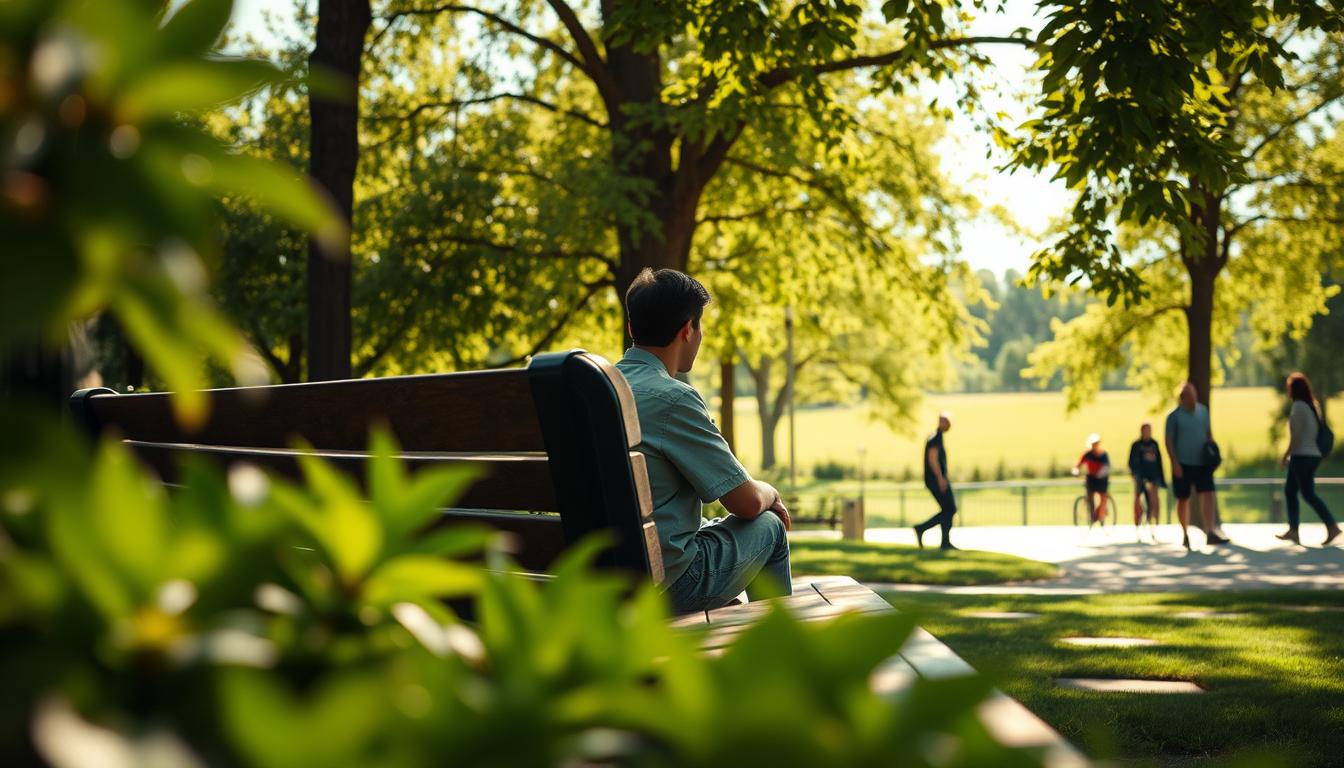
Parque del Buen Retiro’s benches are filled with stories. A man changed his life after 30 years of marriage. He started an art business and learned to value quiet moments.
His art flourished, but aging taught him the importance of being calm. He even learned to cook from YouTube videos. This shows how sitting on a bench can lead to big changes.
Urban contemplation in places like this reveals life’s true pace. A 10-minute chat showed us what we miss in our hurry. Over 40 years, he learned that trust grows slowly, one moment at a time.
Now, his art shows the beauty of patience and sitting quietly.
The Beauty of Observation
People watching from a park bench uncovers stories right before our eyes. A child’s laughter and a pigeon’s landing on a statue are just a few examples. These moments become clear through mindful observation.
Being quiet turns a bench into a spot to see things others miss. The city’s rhythm changes here. You see joggers in the morning, chess players at lunch, and dog walkers at twilight.
“When I direct my undivided attention, I understand concerns like never before.”
Urban wildlife observation finds life in unexpected places. A squirrel storing acorns shows the city’s determination. Even in busy parks, nature finds a way to thrive.
A dandelion growing through concrete and bees following flower paths are just a few examples. These small scenes show how noticing details changes our view of the world. Public seating is rare, making every bench a front-row seat to life.
Next time you pause, take your time to look around. You’ll notice patterns. A couple meeting at the same bench every week or how the sun changes shadows. The world becomes clearer when seen from a quiet spot.
Lessons in Patience
Watching a single oak tree shed leaves or a squirrel’s daily trek teaches the art of practicing patience. A park bench becomes an urban meditation spot, where minutes stretch into mindful moments. Sunlight shifting across the grass shows how waiting isn’t wasted time—it’s part of growth.

“Patience grows when you stop racing against time,” says urban meditation coach Lena Torres, noting how 75% of parents see resilience in kids who practice bench meditation.
Children struggling with bench meditation learn to wait, mirroring how daisies take weeks to bloom. This slow living benefits extend beyond parks—adults report calmer reactions in traffic or lines. Studies show 40% of middle-aged adults feel less self-doubt after adopting this mindset. The bench’s quiet lessons transform frustration into curiosity: a dropped ice cream cone isn’t a disaster but part of life’s messy rhythm.
Connections with the Community
A park bench is more than a place to rest. It’s a starting point for public space social connections. Regular visits turn strangers into neighbors. A simple nod can lead to a wave, then a conversation.
These bench conversations share stories, from local history to daily joys. Even quiet moments become chances to see and be seen. This builds neighborhood connection.
“When I direct my undivided attention to you and listen intently to what you have to say, I understand you and your concerns like I never could before.”
In cities like Brooklyn, adding a bench can increase corner activity by 40%. The Virtual Park Bench program paired seniors with students. They had weekly talks about life and legacy.
These exchanges, often on shared park benches, show how spaces shape bonds. Even in car-heavy areas, redesigning corners with seating can make streets social hubs. A New Haven café’s sidewalk seating boost led to more foot traffic and camaraderie.
Spaces that focus on people over cars foster giving back. One business improving a bench might inspire others. In Buenos Aires, angled corners are natural meeting spots. Istanbul’s corner cafés are filled with lively debates.
These examples show benches are more than furniture. They’re bridges between lives, connecting communities through conversations.
The Role of Nature in Reflection
When I’m stumped or blocked, I’ll walk down to a nearby lake and sit in solitude on the shore enjoying the sights and smells while my mind wanders off to the moon. It always comes back with a big payload of useful ideas.

Urban parks turn simple benches into places for deep thought. A cracked sidewalk’s weeds teach us about never giving up. Squirrels gathering nuts remind us to prepare for the unknown.
These small moments teach us big lessons. Even famous people like Theodore Roosevelt found peace in nature after tough times.
Seasonal changes in parks teach us valuable lessons. Spring’s new growth fills us with hope. Autumn’s leaves teach us to let go.
Winter’s bare trees show us growth can happen quietly. Sitting on a bench, we see our own lives reflected in nature’s cycles. Raindrops and wind remind us to accept life’s surprises.
Studies show looking at nature pictures can calm us down. But today, we’re glued to our phones, missing these moments. A bench under oak trees is like a free classroom.
Here, we find peace and gain new insights. Nature teaches us that quiet moments are not wasted. They are where we grow strong and reflect deeply.
Creativity Sparks from Stilness
Next time you see a bench in a quiet park, think of it as more than just a place to sit. Creative inspiration outdoors grows when we slow down. UK artist Brendan Dawes says that turning off devices helps ideas come to life. He believes that by sitting, observing, and listening, we can tap into our creativity.
Writers get bench writing inspiration from the sounds around them or the leaves rustling. Artists capture the beauty of urban sketching spots where buildings meet nature. Even those solving problems find clarity away from screens. Dawes points out that boredom, when combined with patience, can lead to great ideas.
“The best ideas arrive when I stop chasing them.”
Being quiet isn’t lazy; it’s a choice to pause. Musicians hear city sounds as music; poets see pigeons as symbols. Even casual sketchers notice details they miss in a hurry. Make time for creativity and stilness to let the quiet moments inspire your next big idea.
The Value of Solitude
Being alone in public has many benefits. A park bench is a great place to find peace and connect with yourself. Imagine sitting there, surrounded by nature, yet feeling fully present. This is what solo sitting meditation in peaceful spots is all about.
Studies from Durham University found that just 15 minutes of alone time can refresh your mind. People felt clearer and less stressed after spending time by themselves. One person said:
“I’m happier dining alone now. It’s like having a loyal friend who never judges.”
Research also shows that being alone can make you 25% happier. This is based on long-term studies on mental health.

Parks are perfect for finding solitude. Unlike being isolated, being alone in public lets you stay connected. Nature’s calm adds to the benefits—like sitting under trees where birds sing instead of screens. Leaders like Abraham Lincoln and Winston Churchill used solitude to make big decisions, showing its power for clarity and creativity.
Today, we’re bombarded with constant noise and demands. But even 15 minutes of sitting alone can reduce stress by 30%. Start small: find a quiet spot, breathe deeply, and let your thoughts flow. This practice builds strength and self-awareness over time.
Almost 40% of Americans feel overwhelmed by daily noise. But parks offer free, quiet spaces to find peace. Whether you need 10 minutes or an hour, these moments are key to mental health. Research shows that small breaks can lead to big improvements in emotional balance and decision-making.
Documenting Life on a Bench
“When you focus on yourself and your own needs, it separates you from social obligations that can be difficult and stress-inducing.”
Writing in a bench journal turns simple moments into lasting stories. An urban diary makes park visits into adventures. Notice the changing shadows, the sounds of strangers, or the falling leaves.
Details often go unnoticed when we rush through life. A small notebook or phone app makes jotting down thoughts easy, no matter where you are.
Photography from a stationary viewpoint reveals hidden patterns. Garry Winogrand’s 2,500 undeveloped rolls show how repetition builds art. Even a single bench can spark projects.
Capturing the same scene daily shows seasonal changes or recurring visitors. A 2019 study found 70% of photographers feel their images become visual legacies.
Karen Marcato Kiaer and Ann Amy Shea reunited after 50 years thanks to a college photo. Their story shows howpark bench photographycan bridge time. Sketching or snapping shots boosts mindfulness by 25%, research shows.
Begin with a pen and paper. Take photos from one spot weekly. Over time, these fragments become a diary of place and self. Every scribble or snap adds to a story only you can tell.
Health Benefits of Taking a Break
Stepping away from daily hustle to sit on a park bench isn’t laziness—it’s a science-backed strategy for wellness. Outdoor stress relief starts where the concrete ends. Studies show even five minutes near green spaces can lower cortisol, the stress hormone.
Bench relaxation techniques, like deep breathing while watching leaves rustle, activate the body’s parasympathetic nervous system. This shift reduces muscle tension and blood pressure, easing headaches and boosting energy.

“Now pressure and stress simply slough off my shoulders and blow away in the breeze.”
Urban nature therapy works quietly. Sunlight on your skin boosts vitamin D while trees filter noise pollution, creating a natural reset button. Sitting health benefits extend beyond relaxation: 94% of workers who take breaks report sharper focus afterward.
Micro-breaks as short as 20 minutes outdoors can reset decision fatigue, improving productivity. For older adults, sunlight’s T-cell-boosting rays support immunity.
Healthcare guidelines recommend two hours weekly in nature—split into 20-minute sessions—to maximize benefits. Pair this with sunscreen for safe sun exposure. Even city benches surrounded by greenery offer urban nature therapy, proving wellness doesn’t require wilderness. Let a bench be your pause button today.
Developing Empathy
Watching strangers in a park does more than relax you—it builds people watching empathy. By sitting quietly, you see the diverse community observation of life. You witness a parent’s patience, a teen’s laughter, or a worker’s sigh. These moments help break down barriers, turning strangers into stories we can understand.
“When I direct my undivided attention to you… my biases are attenuated.”
Harvard’s Helen Riess says places like Boston Common naturally spark empathy. Seeing real, unfiltered lives weakens stereotypes. A study there found everyone craved deeper human connection but felt empathy was rare.
Programs like “Empathy Cards” in parks encourage small acts of kindness. They turn compassionate observation into action. When we pause to notice others’ struggles, we train our minds to care.
Empathy isn’t just a feeling—it’s a skill. By witnessing life’s raw, unscripted moments, we practice seeing beyond assumptions. This practice strengthens relationships and builds communities where kindness feels as natural as the breeze on a park bench.
Engaging with Park Activities
Sitting on a bench can spark more than just quiet reflection. Many find themselves drawn into park community events or neighborhood involvement through simple acts. Joining a playground game or chatting with regular visitors can start it all. Over time, these small interactions often grow into bigger roles.
Like leading clean-up days or organizing seasonal festivals. This shows how small actions can lead to big changes.
“Choice in how we engage with spaces builds deeper connections,” says the Bench Project, which started in 2013 with 20 benches. Their journals left on benches show how shared stories turn strangers into neighbors.
Even a bench can become a hub for bench outreach activities. The Bench Project’s global app now connects users to nearby public spaces. It encourages public space participation.
Ideas like “storytelling circles” or bench-based mini-libraries have turned lonely corners into social hotspots. Families use chalk games or scavenger hunts to blend play with community building.
Success stories include parks where benches became meeting points for neighborhood cleanups or intergenerational craft workshops. These efforts don’t require big budgets—just creativity. The project’s journals show how small steps like sharing a thermos of tea or joining a kite flyer’s group can lead to lasting connections. Parks thrive when people see their role in shaping shared spaces.
The Transformative Power of Sitting Stil
Life changing habits don’t always need big actions. A park bench becomes more than a place to sit when you use it to pause. Mindfulness outdoors, like meditating in public spaces, changes how we see time and stress. Starting with just five minutes a day can change your life.
Science backs up what many feel. Studies show short moments of calm can lower blood pressure and reduce anxiety. The mind, once filled with noise, finds peace. One person’s journey shows how anxiety can turn into joy with just two years of quiet moments.
Start anywhere—a local park, a quiet spot. Aim for ten minutes a week. Let the world go by while you sit and observe without judgment. This practice improves focus and empathy over time. The bench teaches you that peace is always nearby, waiting in the quiet.
Public space meditation isn’t about being perfect. Rain or cold? Bring a blanket. Distracted? Try again tomorrow. The goal is to show up. Every minute you sit builds your strength. As you focus on the moment, the world’s noise fades, revealing clarity.
What if your next big moment starts with a bench and five minutes of quiet? The park bench perspective is a simple way to reset your mind. It leads to healthier choices, deeper connections, and a quieter, more present you. Your bench is waiting. Take a seat, and let calm change what you thought was possible.