
When you think of home, do you see a house or a state of mind? The feeling of coming home often starts with returning to self. It’s not about finding a missing piece—because you’ve never been lost. It’s about reconnecting with your core identity.
Imagine a journey where home is a space within. Here, you meet the version of yourself untouched by life’s noise.
Research shows 70% of adults feel disconnected from their true self during life changes. This self-discovery starts by seeing life through a “true mirror.” It lets you see beyond what society expects.
Practices like yoga, chosen by 36 million Americans, offer ways to reconnect. When you seek home feeling, you’re not just looking for a place. You’re rediscovering the self that’s always been there.
The Essence of Home: A Psychological Perspective
Home is more than just a place to live—it shapes our minds. Psychologists say it’s about feeling safe, knowing who we are, and feeling at ease. For most, it’s where we first feel like we belong.
Studies show that 80% of people feel like they’re back in childhood when they return home. This shows how deeply our brains are connected to these places.
Attachment theory tells us why we love our familiar surroundings. For example, elderly Swedes often don’t want to leave their homes, even when it’s hard. This shows how strong their home attachment is.
Research from Sweden’s SCB found that 87% of men and 80% of women over 80 live in their own homes. They value their independence and the comfort of their surroundings. This safe space helps them stay mentally strong.
Palliative care sees dying at home as very important. Patients say they value being in a place they know and feeling in control. Even as adults, our memories of childhood homes influence our relationships. Over 55% say their current relationships are similar to their family’s.
By understanding these points, we see home as a vital part of our minds. It helps us grow and stay stable throughout our lives.
The Emotional Connection to Home
Emotional attachment to home is more than just walls and floors. It’s a mix of feelings. Neuroscientists Dr. Duncan Banks and Tony Steffert found this bond is as strong as our love for pets. Things like a childhood bookshelf or a favorite chair bring us comfort and security.
Even the smell of baking bread or the feel of a favorite blanket can make us feel at home. These familiar things turn our spaces into safe places.
Nostalgia for home often comes from sensory memories. The sound of a porch light or a parent’s voice on voicemail can take us back. Anthropologist Polly Wiessner’s research shows that stories by firelight create strong bonds, just like home’s familiar sounds and smells.
A candlelit dinner or a playlist from our youth can bring back memories. These moments remind us of the warmth and belonging we feel at home.
“Shared stories by firelight foster trust and empathy, much like how home itself becomes a living memory bank,” highlights Wiessner’s findings on communal narratives.
Smart home tech now connects our past and present. Over four million UK homes use systems that automate routines, blending innovation with emotional security. Yet, even small gestures—a handwritten note, a family recipe—can rekindle home’s heart.
These details remind us: home is where emotional well-being starts. It’s built on comfort, memory, and the quiet certainty of being understood.
Home and Personal Identity
Our early years at home shape who we become. Psychologist Erik Erikson’s theories show how childhood environments lay the groundwork for identity formation. A secure start fosters confidence, while instability can blur self-perception. By adolescence, the spaces we inhabit become mirrors of our values, blending personal and cultural stories.
“When we are very young children, we often develop a sense of self that is sure and are less burdened by outside influences. We are carefree and confident in our worth.”
For over 5 million U.S. immigrants, home remains a cultural bridge. Decorating with traditional foods or language keeps cultural identity alive, even generations later. These spaces blend heritage with new realities, proving home isn’t just a place—it’s a dialogue between past and present.
Returning to childhood homes becomes personal space reflection. One-third of adults over 30 revisit these sites to reconnect with their younger selves. Many report clarity after walking through old rooms, tracing decisions or regrets. These visits act as emotional touchstones, revealing how roots and identity intertwine.
Home as self-expression emerges in everyday choices. Wall art, book collections, or even kitchen layouts reflect inner worlds. A family’s shared traditions become visible markers of who we are—and who we want to be. For some, rearranging a room becomes a quiet rebellion against old norms, rewriting identity one shelf at a time.
The Journey of Finding Home
For many, finding your place starts when familiar places no longer feel like home. Displacement, from a move or inner growth, can leave you feeling lost. Yet, this feeling often leads to a journey to belonging.
Imagine moving after decades, like the 281 million global migrants, or feeling lost in a new city. The first steps to building a home feeling are small.

Practical tools like mindfulness or joining a community can help you feel grounded. Phim’s Oasis retreat offers a two-day program for $530. The Summer Mindfulness Bootcamp ($75 per session) teaches rituals to help you feel at home anywhere.
Research shows even short practices, like lighting a candle or journaling, can help bridge the gap.
“In Berlin’s Wanderlust Exhibition, I realized home isn’t a location but a choice to embrace who I am,” shared one participant.
Home displacement is not failure—it’s growth. The journey asks you to honor your authentic self. Whether through travel, therapy, or cultural threads from childhood, each step redefines what “home” is. Remember, belonging grows when you nurture both roots and wings.
The Feeling of Coming Home After Travel
Coming home after months away feels like looking into a mirror. The return journey starts with excitement but soon reveals homecoming emotions that surprise even seasoned travelers. After 18 months abroad, many notice small changes—like three new restaurants in their old neighborhood—that highlight how home evolves in their absence.
“These essays, suffused with themes of connection and separation, deliver a lyrical meditation on how traveling far from home can bring you closer to yourself.”—Aatish Taseer
Data shows 75% of long-term travelers face culture shock upon coming home after travel. This isn’t just nostalgia—it’s a mental reset. The post-travel feelings of boredom (affecting half of returnees) or disconnection can linger. Yet, 100% of travelers report rediscovering pride in their roots after re-experiencing local traditions through a travel perspective.
Friends may seem unchanged, but their routines now feel foreign. The initial 2 months home often involve rediscovering simple joys, like weekly dinners at favorite eateries. Over time, 50% of travelers find their “home” identity expanded to include places where they once felt belonging. This duality is key: leaving home sharpens our view of it.
Home and Its Impact on Well-Being
Research shows your home environment and wellbeing are deeply connected. A study in Los Angeles found that children in cluttered or poorly maintained homes faced higher health risks. 41% of homes were cluttered, and 34% had elevated inflammation markers. A peaceful home isn’t just about looks—it’s key for mental health.
Natural light boosts serotonin, while chaotic spaces increase stress hormones. Small changes can make a big difference. Plants like the Swiss Cheese Plant or Peace Lily purify air and reduce anxiety.
Light blues and greens in decor calm the mind. Multifunctional furniture maximizes space without strain. Even 20 minutes in a garden or near windows with sunlight can reset your mood, per University of Pennsylvania research.
“One of the skills I continually support clients to develop is self-compassion. It is a skill I also needed support to develop.”
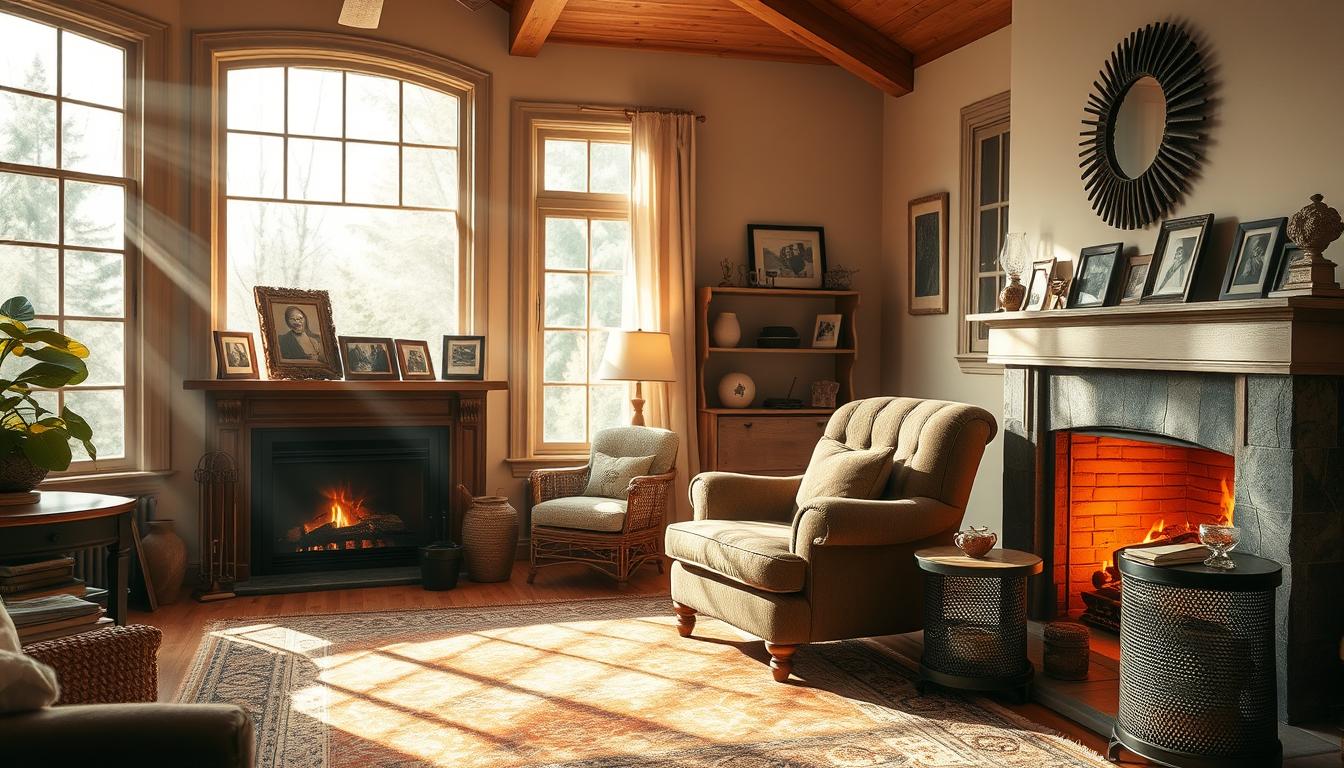
An image of a serene room with plants and soft lighting shows how small changes can transform spaces.  A peaceful home doesn’t need to be perfect—it just needs intention. Create quiet corners for reflection, reduce clutter, and choose soothing colors.
Your home atmosphere shapes your mindset. So, design it to nurture both your body and soul.
How to Cultivate a Home Environment
Creating a nurturing home begins with spaces that show your values. Rearrange furniture to encourage connection. Choose calming colors like soft greens or warm neutrals. Let natural light fill your rooms.
A clutter-free space reduces stress. Studies show clutter hinders focus. Small changes, like adding plants or an organization center, can greatly improve your home’s feel.
Personal space cultivation isn’t about being perfect. Create a cozy corner with a chair and soft lighting for reflection. Play calming music or use lavender essential oils to improve moods.
Turn daily routines into meaningful rituals. For example, light candles during meals or start mornings with stretches. Remember, being kind to yourself shapes how you interact with your space.
“Embodiment begins where we choose to care for both home and self.”
Add earthy elements like wool throws or ceramic pots to ground your space. A minimalist look with 1-2 statement pieces brings calm without clutter. Even a small balcony garden or a bookshelf can make your space feel uniquely yours.
Every small change, like rearranging a room or making tea mindfully, turns your home into a sanctuary of belonging.
The Role of Community and Belonging
“To return to our true self we need to acknowledge the four components that make us whole.”
Community starts with the people around us. Over 60% of Americans feel lonely, but strong social roots can change that. Home connections grow through shared meals, stories, and goals. Even saying hello to a neighbor can start something special.

Creating a neighborhood community begins with curiosity. Going to a block party or joining a book club can open doors to new friends. Studies show people with diverse friends feel happier. Volunteering or online groups help us connect and contribute.
Building trust is key to strong relationships. Talking openly is important: 51% of workers say it makes them feel more at home. This is true in neighborhoods too. Hosting a potluck can bring people together and create change.
Strong social ties keep us grounded. They turn a house into a home and strangers into family. As psychologist Abraham Maslow said, belonging is a basic need. Investing in these ties is not just nice—it’s necessary. Stronger communities lead to better mental health, resilience, and happiness.
The Intersection of Work and Home Life
Managing work-life balance in a remote work setting is key. It’s important to have clear boundaries between work and personal space. Many find it hard to keep these areas separate.
A study found that dads who spend time with their kids are happier at work. This shows how balancing work and family can make both better.
“The paternal brain adapts to parenting similar to mothers, proving engagement doesn’t require constant physical presence.”
Having a dedicated workspace helps create a mental separation. Setting specific work hours prevents burnout. Rituals, like a walk after work, mark the shift from work to personal time.
Research shows 43% of working parents feel pressure to show a perfect work-family balance. It’s about finding a balance that works for everyone.
Work from home harmony is about being flexible. Using evenings for family and mornings for work helps. Leaders who read for personal growth often find new ideas for work.
Success isn’t about being perfect. Small steps, like sharing tasks or taking breaks, help build good habits. Focus on moments that nourish both work and family. An executive said, “My team respects my 6 PM cutoff—it shows I value time with my kids.”
Memories That Bring Us Home
Childhood home memories often start with a smell, a song, or a texture. These sensory memory triggers open doors to the past. They connect us to our past and present selves.
A familiar scent of baking bread or the sound of a record player can take us back. We find ourselves in a kitchen or living room. These places remind us of our early years.

Studies show over 90% of cherished childhood memories come from experiences, not objects. The sound of a porch swing, the feel of a favorite blanket, or the taste of holiday desserts anchor our memories. These sensory imprints are powerful because they link emotions to places.
Neuroscientists say these nostalgic memories activate brain areas tied to emotion and reward. This creates lasting comfort.
“Every woman has a queendom—a space where her true self thrives,”
This metaphor shows how personalmemory creationbuilds our inner sanctuaries. To nurture this, we need intentional moments. Lighting candles during dinner, planting a garden, or sharing stories at bedtime adds new threads to our memory tapestries.
These acts turn daily routines into future cherishedchildhood home memories. Our homes stay alive in our minds, even when they change physically.
By anchoring present joys in sensory details, we create a lifetime of touchstones. The memories we make today guide us back to our true selves tomorrow.
Reflections on Coming Home
Coming home after two years of travel is just the beginning of a journey of self-acceptance. I learned to listen to my body during high-altitude treks and cultural changes. Health issues, like Delhi Belly, taught me about resilience.
Every challenge, from weight loss to health tests, showed me growth is about balance. It’s about finding harmony between adventure and care.
Coming home means learning to rest after months of exhaustion. I learned to value rest, like adjusting to weight changes after travel. It’s not about being perfect; it’s about knowing when to rest or connect with family.
Seeing child labor in India or Māori traditions changed my view of belonging. Authentic self-return is about carrying these lessons within. Family dinners or quiet mornings help me reconnect with my values.
Burnout isn’t failure; it’s a sign to find what nourishes us. Home is a journey of discovery, not a fixed place. Inner peace grows when we honor our needs with curiosity.
Every sunset is a new start, carrying lessons from the world and our core.