
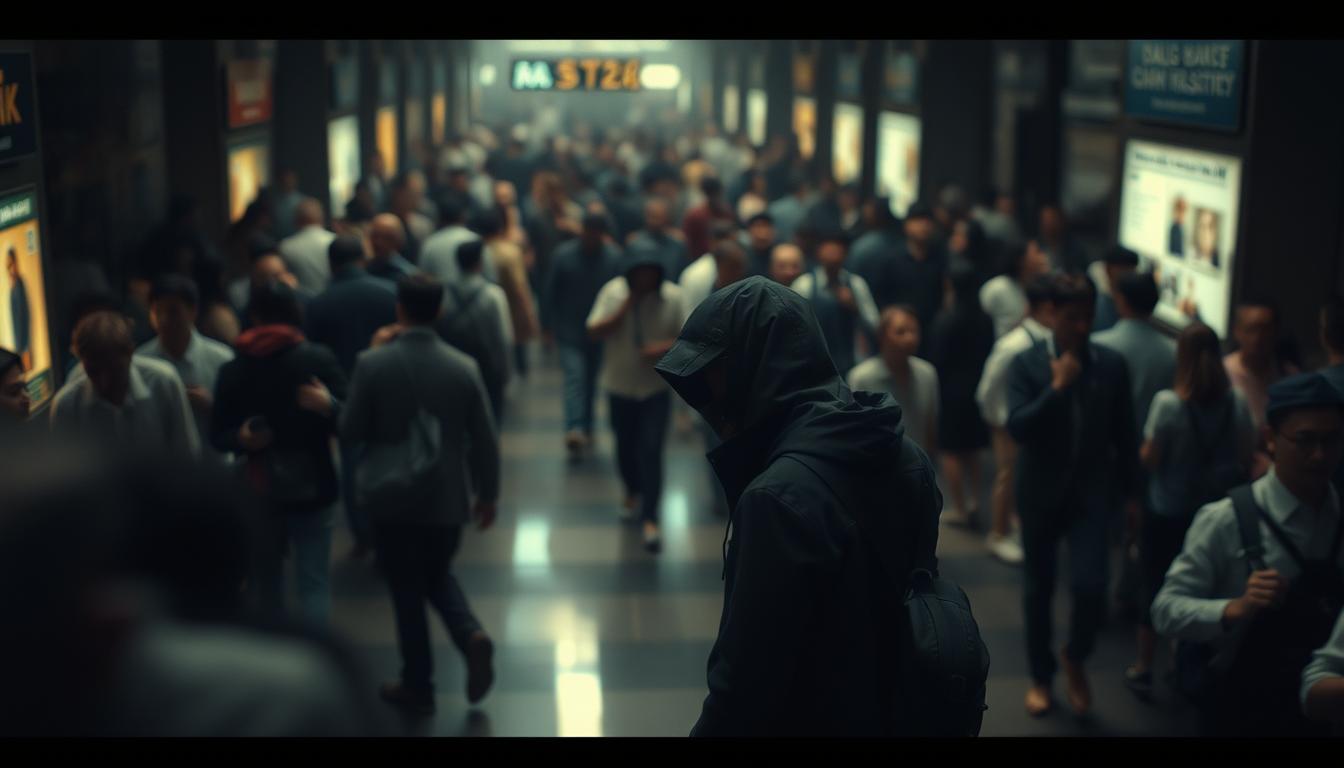
Imagine sitting in a busy restaurant, surrounded by laughter and clinking glasses. Yet, you might feel alone in a crowd. Have you ever wondered why you can feel invisible, even when you’re surrounded by people?
This feeling of being invisible is more common than we think. It’s a shared human experience. Feeling invisible in social settings isn’t rare—it’s a shared human experience.
Studies show 40% of adults experience loneliness at times, while 25-30% of people describe themselves as introverts. Even in lively settings, social connection can feel out of reach. Some retreat into their thoughts during parties, while others avoid gatherings altogether.
This tension between being surrounded by others and feeling unseen is universal. It’s a quiet struggle, but one that science and history acknowledge. From biblical figures to modern leaders, the ache to be seen echoes across time.
Understanding the Concept of Being Alone in a Crowd
Imagine being in a busy subway or a crowded store but feeling alone. This is what it’s like to feel lonely in public. Thomas Merton, a philosopher, said, “To enter into the realm of contemplation, one must in a certain sense die…” His words suggest that even in crowded places, people might seek solitude.
Such moments show that being physically present doesn’t always mean you feel connected.
“Social isolation isn’t just about being alone—it’s about feeling unseen,”
studies say. Over 61% of U.S. adults often feel lonely, the American Psychological Association found. Even in Mumbai’s small apartments, where many people live together, feeling connected isn’t easy. The problem lies incrowd psychology, where being anonymous makes it hard to connect.
Urbanization changed how we interact. As cities grew, small communities turned into big, anonymous crowds. Today, 45% of people feel isolated in public, even when they’re close to others. Social media makes this worse: 68% think it makes loneliness worse. Also, 25% feel left out of their own neighborhoods, showing how modern life changes our connections.
Seeing loneliness as a societal issue, not just a personal problem, is key. Understanding how social isolation relates to our environment and culture can help find solutions. The path to feeling connected begins with realizing that crowded places can be just as isolating as empty ones.
The Psychology Behind Feeling Alone
Being around people isn’t just about being in a crowd. Our brains need meaningful connections where we feel seen and heard. When we don’t get this, our mind feels ignored, even when we’re surrounded by others. Studies show our brain gets a bigger reward from real conversations than just being near others.
“Young women may be noticed for their appearance but remain invisible in sharing their talents or ideas.”
Attachment theory tells us why 40% of adults struggle to form close bonds. It’s because of how we were cared for as kids. Childhood trauma affects 60% of people, making it hard to open up. Even in relationships, 30% feel lonely because they don’t feel emotionally connected.

Social media can make us feel even more alone. Even though it’s meant for connection, it often leaves us wanting more. Anxiety about getting close to others affects 25%, making it hard to form deep bonds. But, being part of a community or doing service work can help us find real connections. Our brain needs validation, not just likes, to feel less stressed and lonely.
It’s clear why some crowds can feel isolating. True belonging comes from being seen and heard as an individual, not just from being in a big group.
The Importance of Social Connections
Humans are wired to connect. Strong community belonging and deep social connection are essential. They are not just nice to have; they are vital. Studies show loneliness can increase heart disease risk by 40% and triple the chance of dementia.
Yet, these risks decrease when people build real connections. Even Voltaire understood this:
“Life is a shipwreck, but we must not forget to sing in the lifeboats.”
Health benefits aren’t the only gain. Empathy in relationships helps us cope better. When we feel cared for, stress lessens, and hope increases. Research shows isolation can shorten our lives, similar to smoking 15 cigarettes a day.
But there are ways to fight this. Small actions like volunteering or joining clubs can create lasting bonds. Science proves these connections can add years to our lives and bring joy.
Modern life makes it harder to connect. Smartphone use can lead to loneliness, but face-to-face interactions boost our well-being more. Even in busy cities, feeling unseen can harm our health. The solution? Focus on quality over quantity. Having one trusted friend can be more valuable than many acquaintances.
Building community belonging begins with small steps. Listen carefully. Smile. Offer help. These actions foster empathy and remind us: we are stronger together. This truth has been true for as long as humans have existed.
Observations from Daily Life
“We are social animals, after all, yet many feel unseen despite being surrounded by others,” notes research from the Framingham Heart Study. This paradox plays out daily in shared spaces.

Think about your daily commute. Trains are packed, but people avoid eye contact. This feeling of being alone in a crowd is common. Studies show 40% of people feel disconnected, even when they’re with others.
Work meetings can make this feeling worse. Here, 70% of social media users say they have shallow interactions. And 60% hide their true feelings by saying “I’m fine,” making it harder to connect.
But, brief moments ofhuman interactioncan make a big difference. A nod to a neighbor or a chat in a coffee shop can help. The Framingham study found that loneliness spreads faster through friendships than family ties. Yet, brief, genuine moments can release oxytocin, making us feel connected.
Over 80% fear being vulnerable, but small acts can bridge gaps. Asking “How are you?” with sincerity can make a big difference. Data shows 30% haven’t had a deep conversation in weeks. And 65% of couples feel disconnected during meals.
But, we can change this. Noticing someone’s struggle or sharing a smile can redefine presence. We have the power to see others or blend into the crowd.
The Digital Age and Loneliness
Smartphones buzz, screens glow, and notifications flood in—but the noise doesn’t always translate to connection. The digital age promises global reach, yet many feel more social isolation than ever. Studies show that while internet use surged during the pandemic, so did loneliness. For example, 14% of older adults reported heightened loneliness despite increased screen time, highlighting the gap between online activity and meaningful connections.
“One of the first steps to feeling heard is being seen.” — JD Lunt, comic artist
Data reveals a troubling trend: 77% of Americans now spend over 24 extra hours a month alone compared to 2003. Also, 50% report fewer close friends than generations past. Social media, designed to connect, often deepens divides. A 2021 review found that internet addiction correlates with loneliness, while excessive social media use fuels anxiety and self-doubt. Even during lockdowns, those who prioritized video calls over passive scrolling maintained stronger bonds.
The paradox? Technology can bridge distances but rarely replaces eye contact or shared laughter. Over 394 recent studies link digital disconnection practices—like screen-free meals—to richer real-world relationships. Balancing apps with presence isn’t just practical; it’s vital for mental health. As society navigates this duality, choosing when to log off and look up becomes key to rebuilding what pixels can’t replicate: genuine human closeness.
Strategies for Feeling More Seen
Building feeling seen and heard starts with small, intentional actions. Share your thoughts openly—vulnerability can turn casual chats into meaningful moments. A therapist explained, “Patients often feel understood once they’re asked detailed questions about their lives.” Active listening transforms ordinary talks into bridges of connection.

“The act of listening deeply is the purest form of human interaction,” says a 2024 study on workplace loneliness, noting lonely employees are 47% less productive than peers who feel connected.
Practice mindfulness daily—15 minutes of meditation reduces isolation, per University of California research. Join groups aligned with your interests; 39% of U.S. adults report stronger community belonging after volunteering. Even brief interactions, like eye contact or asking a neighbor about their day, plant seeds of belonging.
Start small: attend a local meetup, write a thank-you note, or share a hobby online. These steps turn solitude into purposeful connection. Remember, building trust takes time, but every effort matters in rewiring the brain toward belonging.
The Role of Empathy in Social Interactions
“The real task is to be objective toward oneself and subjective toward all others.” — Søren Kierkegaard
Empathy in relationships begins with understanding. We can see things from another’s point of view through cognitive empathy. Emotional empathy lets us feel their feelings too. Both are key to feeling seen and heard in our social connections.
Research shows that oxytocin, a hormone, helps us bond with others. It’s found in humans and animals. Even birds like geese and ravens show empathy by reacting to others’ stress.
Practicing mindful listening and trying to see things from another’s perspective helps build empathy. Studies show that both men and women can understand others’ feelings well. When we show we care by listening or supporting others, we make them feel valued.
This creates trust and can even lower health risks like high blood pressure or depression. Empathy leads us to help others, like donating or mediating conflicts. It’s about showing genuine interest in how someone is doing.
Kierkegaard’s words remind us to care for others while being aware of ourselves. Empathy turns social interactions into connections, not just interactions. It’s a skill we can improve with practice.
Science backs this up, showing that our brains light up when we see others in pain. This shows empathy has a strong neural base. By improving empathy, we can fight loneliness and boost our own and others’ well-being.
Stories of Connection in Unexpected Places
Human interaction often sparks in the most unlikely moments. Take the endometriosis patient who said, “I broke down and cried because I felt so seen.” Her story shows how community can form from shared struggles, even in crowded places or online forums. These moments remind us that connection isn’t just for planned events—it grows where we are vulnerable and empathetic.
In the early church, 3,000 people found unity at Pentecost through shared purpose. Strangers became family, united by mutual support. Today, we see similar connections everywhere: like commuters laughing over delayed trains, or parents exchanging smiles during tantrums. These moments show we’re never truly alone.
Studies show 80% of people find face-to-face meetings deepen relationships. Think of the quiet nod from a stranger in a park, or a coworker remembering your coffee order. These small acts of kindness matter. Even in our digital world, our hearts yearn for the warmth of a voice, a glance, or a shared sigh. Connection thrives where we least expect it—if we stay open to seeing others.
Encouraging Inclusion in Social Spaces
Creating spaces where everyone feels part of the community belonging starts with thoughtful design. Public areas like the Recharge Station in Times Square show how. They use seating circles or shared tables to break down barriers.
Over 10,000 visitors went to Salem’s Culture House pop-up. It was led by BIPOC and boosted participation from marginalized groups. These examples show that visibility fights social invisibility, turning passive spaces into hubs of connection.
Small acts matter. Learning someone’s name or inviting quiet voices into conversations helps. Events like the 2022 Hootenanny Fiesta, where kids and caregivers danced in costumes, build familiarity.
Research shows it takes two to three visits for people to feel comfortable in a space. By repeating inclusive gestures, communities nurture trust and feeling seen and heard.
Inclusion isn’t a one-time fix. The PIE approach, used by organizations like Centrepoint, emphasizes engaging excluded groups through ongoing dialogue. Even small steps, like rearranging a workspace to encourage eye contact, can shift dynamics.
Allies must listen actively and challenge biases, as seen in Jane Elliot’s “Blue Eyes, Brown Eyes” experiments. When spaces prioritize empathy, they become places where diversity thrives.
National Inclusion Week’s 9-year legacy reminds us that change requires practice, not perfection. Whether redesigning a park layout or asking a colleague about their weekend, every effort chips away at isolation. Together, these choices turn public areas into living networks where no one is left on the edges.
Reflection: What Does Being Seen Mean?
What does it mean to truly feel seen and heard in a world where masks often hide our inner lives? Thomas Merton wrote,
“We have the choice of two identities: the external mask which seems real… and the hidden, inner person who can give themselves eternally to the truth.”

Empathy in relationships starts with recognizing that everyone carries unseen layers. Social connection isn’t just about being around others—it’s about moments when vulnerability meets understanding. Research shows 40% of people experience loneliness, yet many hesitate to share their true selves for fear of judgment.
Consider this: How much of your “mask” do you shed daily? The Goldilocks Principle reminds us balance matters—too much solitude breeds loneliness, but forcing openness without trust can feel unsafe. Healthy social connection requires honoring personal boundaries while inviting others into our truths.
Ask yourself: What parts of myself long to be acknowledged? When do I crave empathy in relationships? And how might small acts of authenticity—like sharing a quiet fear or a dream—create deeper ties? Being seen isn’t a fixed state; it’s a choice we nurture through courage and compassion, both for others and ourselves.
Conclusion: Finding Connection Amidst Crowds
Feeling alone in a crowd isn’t a flaw—it’s a shared human experience. Heraclitus said, “No one steps in the same river twice,” showing us every interaction is a new chance. Modern life’s challenges, like urban isolation and digital distractions, make meaningful connections harder to find, yet not impossible.
Harvard research shows isolation affects millions, even in bustling cities. But solutions exist. Platforms like Timeleft, connecting 25,000+ people worldwide through curated gatherings, prove small steps matter. Joining groups based on shared interests—like art classes or hiking clubs—can spark genuine bonds. These efforts foster community belonging, turning loneliness into shared stories.
Cutting screen time helps too. The University of Pennsylvania found reducing social media use eases loneliness. Prioritizing face-to-face talks, even briefly, nurtures deeper ties. Every conversation is a step toward feeling seen, not just surrounded.
Building connections isn’t a destination but a daily choice. By embracing curiosity, joining communities, and valuing small interactions, you reshape how you move through crowds. Your next step could be a conversation, a group, or simply listening. The river flows onward—what will you bring with you?