
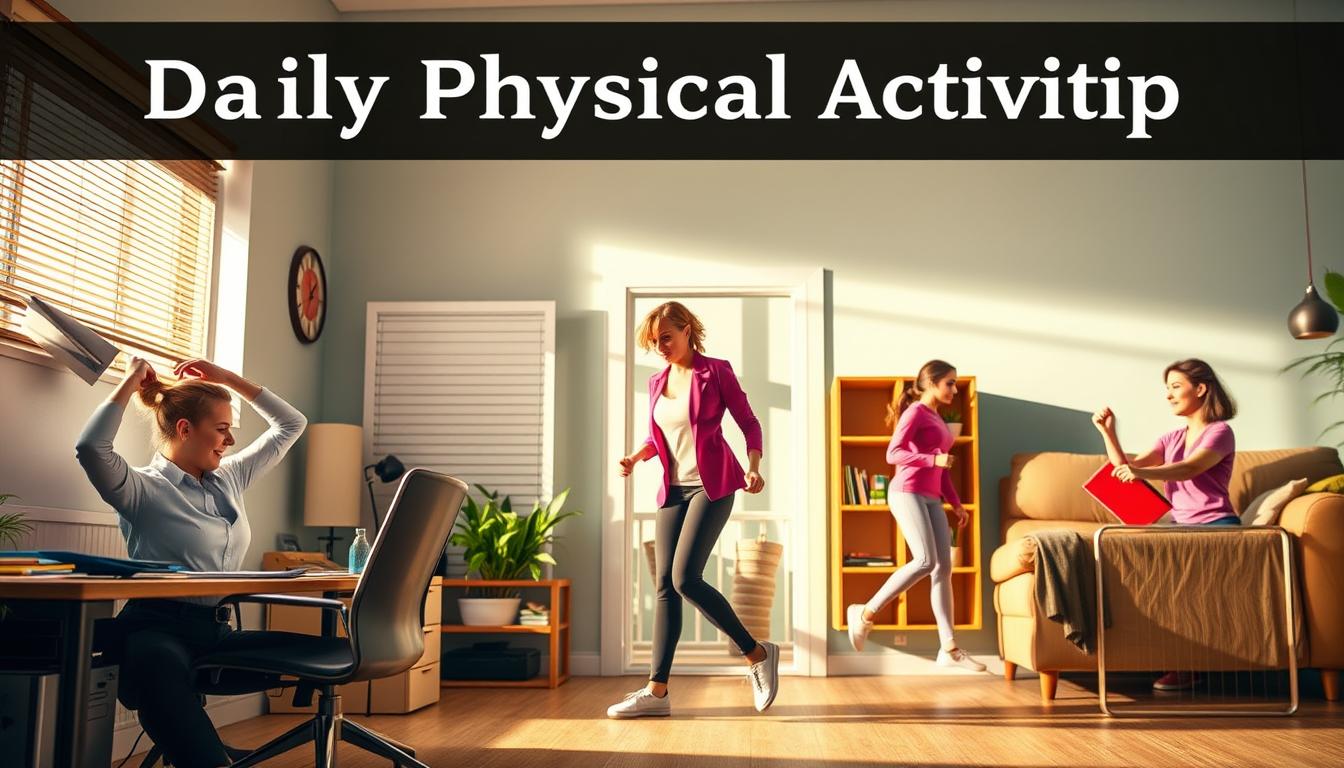
Busy lives often make us forget about exercise. But, small changes can make a big difference. A study found hotel workers who saw their work as exercise got healthier.
No gym? Try the New York Times 7-Minute Workout. It’s great for those with little time.
Make daily tasks active. Climb stairs, walk during lunch, or do chores. These activities can help you stay active. Just 150 minutes a week of moderate activity can improve your mood and strength.
Healthy habits like standing desks or quick YouTube workouts can fit into your day. Every bit of movement counts. Start small and turn daily moments into active ones.
Understanding the Importance of Daily Movement
Our bodies are made to move. Being stuck at your desk for too long can harm your body and health.
Science shows health benefits movement offers. The CDC says regular physical activity lowers heart disease, diabetes, and cancer risks. Just 30 minutes a day can improve blood pressure and boost energy.
Sitting for less than eight hours a day also reduces health risks, the Department of Health and Human Services notes.
Physical activity importance goes beyond just staying fit. A study on twins found active ones had lower disease risks, even with similar genes. Every bit of activity, like walking or stretching, helps meet the CDC’s 150-minute weekly goal.
Small actions, like a 15-minute walk at lunch, can make a big difference.
Mental health also benefits from exercise. It increases serotonin, helping with anxiety and stress. Regular movement improves sleep and focus, showing movement mental health is key. Even simple desk exercises can help.
Most adults don’t meet activity guidelines, but starting small is key. Activities like walking the dog, gardening, or dancing while cooking all count. Every movement adds up to daily exercise benefits, proving activity is vital for well-being. Your body will thank you when you move—so start today, one step at a time.
Simple Changes to Your Daily Routine
Small changes in your daily tasks can lead to more movement. Begin your day with a 5-minute stretch or walk. This wakes up your muscles and boosts your energy.
When you’re out running errands, try parking farther away. This adds more steps to your day. Choosing stairs over elevators also burns calories and strengthens your legs. It’s a simple way to get more exercise without spending extra time.

“Don’t underestimate the power of small chunks of time to get things done.”
Use breaks at work or home for some movement. Do 10 squats during TV commercials or take a quick walk during phone calls. Standing desks can help you burn 50 calories an hour. Short activity bursts every hour can also reduce sitting time by 30%.
Even doing chores like vacuuming quickly or gardening can count as exercise. These small actions add up to more activity each day.
Little changes like walking part of your commute or pacing while on calls can make a big difference. Over time, these changes can help you reach 8,000–10,000 steps a day. This can lower your risk of heart disease and diabetes. Start making these changes today, and your body will appreciate it.
Making the Most of Breaks at Work
Office movement breaks can turn sitting hours into chances for health and focus. Just 5-minute active work breaks every 90 minutes can boost your energy. Studies show 70% of workers feel more productive after moving, proving breaks actually save time.
Start with small desk exercises. Stretch your shoulders or do chair squats during calls. Using a standing desk for 30 minutes can raise productivity by 46%. Set a timer to walk to the printer or water cooler, adding steps without leaving your floor.
Lunch breaks are a great chance to refresh. A 10-minute walk outside can reset your focus. Pack a salad and stroll around the building—combining fresh air with steps. If meetings allow, suggest a walking chat instead of a conference room. Teams in tech firms report 20% more creative ideas during these moving discussions.
Short bursts of movement are key. A 2022 study found even 30-second calf raises or arm circles reduce stiffness. Pair desk pushups with hydration breaks. Over time, these workplace activity habits cut fatigue and improve mood naturally.
“Movement snacks” add up—15 reps of desk dips or leg lifts during commercials can spark energy without disrupting workflows.
Small choices like taking stairs or pacing during calls turn routine tasks into wellness wins. Every break is a chance to move smarter, not longer.
Family-Friendly Ways to Stay Active
Turning family fitness activities into fun moments strengthens bonds and health. Even short bursts of movement, like 10-15 minutes of dancing, boost cardio and moods. A study showed that brief high-intensity efforts can lower heart risks by up to 49%.
No gym? No problem. Families can hike trails, bike to parks, or create backyard obstacle courses. Use chalk and cones to make it fun.
“Most of us feel stressed when busy schedules steal connection time. I prioritize fun with loved ones—even during chores or meals.”

Active family time doesn’t need to be complicated. Turn errands into movement by walking to the park. Make laundry a squat challenge.
Toddlers love animal walks (marching like elephants, tiptoeing like cats), while older kids enjoy partner planks or tag games. Yoga flows or dance parties before bedtime mix mindfulness with fun. Even chores become adventures when you race to fold clothes or sweep floors.
Weekly fitness challenges, like step counts or bike rides, spark friendly competition. Use apps to track progress and celebrate milestones. The key? Prioritize play over perfection.
Whether it’s a weekend hike, a living room workout, or a spontaneous dance break, every move counts. When parents model movement, kids learn to see activity as part of life, not a chore.
Sneaking Movement into Household Chores
Turn active housework into hidden workouts. Sweeping floors, scrubbing sinks, and mopping are chores as exercise. Each action works your muscles while cleaning. A 15-minute scrub session can burn up to 100 calories, showing household movement adds up.
Make physical domestic tasks into mindful movement. Vacuuming with big arm swings burns more calories. Gardening? Digging and raking raise your heart rate like a fast walk. Even folding laundry can include calf raises between piles.
“Your subjective well-being motivates and indicates your success.”
Short efforts matter. Mopping in 5-minute intervals raises your heart rate, and scrubbing toilets strengthens your core. Pair tasks with squats while washing dishes—small moves add up. Science shows this approach can increase daily activity by 30%, turning chores into fitness wins.
Make every task count. Dance while wiping counters or march in place during laundry cycles. The goal? Redefine chores as opportunities—not obligations. Every bit of motion chips away at sedentary habits while achieving a clean home.
Utilizing Technology to Stay Active
Smartphones and wearables are full of fitness technology that turns daily habits into chances to move. Apps like MyFitnessPal or Pacer work with devices like Fitbit or Apple Watch. They count steps, log workouts, and set goals just for you.
These movement tracking tools do more than count steps. They make progress fun with badges or streaks. It turns exercise into an exciting adventure.

Don’t worry about complicated setups. Just turn on activity reminder apps like Google Fit or StandApp. They buzz when it’s time to move.
A short walk during a work break can help you reach your 10,000-step goal. Smartwatches can remind you to move if you’ve been sitting too long. Use tech for active lifestyle like cycling apps or yoga videos on YouTube. Screen time becomes a workout buddy.
See your progress in a cool way: check weekly step trends on Strava or compete with friends in challenges. Even small actions, like parking farther away, show up in real time. Tech is a tool to add movement to your day without changing your life too much.
Movement Opportunities During Screen Time
Screen time doesn’t mean you have to sit all day. Active screen time mixes fun with movement. Try squats during commercials or march in place during previews. These small actions help reduce sitting time without missing your shows.
Use commercials as workout breaks. Stand up, stretch, or do wall push-ups. A 2022 study showed even 1-2 minute breaks hourly can lower sedentary risks by 14%. Streaming with a stationary bike or yoga can burn 50-100 more calories per hour.
Phone scrolling can lead to movement. Walk around the room while listening to podcasts. Desk workers, try standing desk intervals instead of sitting breaks. Every hour, do 10 floor-to-sky reaches for tiny but effective moves.
Even short activities matter. Research shows 10-minute treadmill sessions during shows can increase daily activity by 30%. Swap sitting for active viewing: jog in place during game shows or do chair dips during ads.
Remember, movement during media consumption isn’t about giving up. It’s about making smart choices. Turn screen time into a chance to move more—your body will appreciate it.
Building a Supportive Environment
Small changes in your surroundings can make moving around feel natural. Sitting for over 8 hours a day can lead to health costs of more than $225 billion nationwide. Creating spaces that encourage activity starts with active environment design.
At home, place yoga mats near doors or set up a corner for squats. Replace couches with balance balls or step stools to make movement-friendly spaces. Keep stairs visible and replace sedentary areas with activity-promoting setups.

Offices can change with standing desks, under-desk treadmills, or walking paths in hallways. Companies with on-site gyms or fitness classes support the PHIT Act’s goal to make exercise more accessible. Use chat tools to signal breaks: “
Feel free to shut yourself off from colleagues when you need focused time. If using an internal chat, set a ‘Do Not Disturb’ message to explain movement breaks.
This creates a physical activity environment where coworkers respect each other’s health goals.
A supportive movement community boosts results. Join step challenges, organize lunchtime walks, or partner with coworkers for accountability. Even small changes, like taking stairs daily, add 3,700 steps per mile climbed.
When spaces and social norms encourage activity, lasting habits form without constant effort. Your environment shapes your choices more than willpower alone.
Planning Active Social Outings
Turning social plans into active social activities makes exercise fun. Instead of coffee dates, try a morning hike or a dance class with friends. These movement-based gatherings create moments of connection and health.
“My days feel more ‘eventful’ when I combine goals with fun. Exercise with friends makes progress feel natural, not forced.”
Start small by replacing sedentary habits with motion. Organize a weekend bike ride or a backyard yoga session. Apps like Meetup or local parks departments list physical social events, from paddleboarding to outdoor boot camps.
Even casual meetups can be active. Host a game night with active games like charades or a post-dinner walk.
Exercise with friends boosts accountability. Studies show group fitness sessions improve workout adherence. Turn errands into adventures—walk to lunch spots or explore neighborhoods on scooters.
The key is creativity: every meetup can be a chance to move. When laughter mixes with sweat, health goals feel like play, not work.
Staying Motivated to Be Active Daily
Starting small is key to moving more. movement motivation tips should match your lifestyle. Aim for 150 minutes of moderate activity each week. This can be 30 minutes, five days a week, to boost energy and lower health risks.
Choose activities you enjoy for your daily activity habits. Walking the dog, taking stairs, or playing with kids counts. Dog owners who walk their pets daily often lose weight and feel happier.
Break activity into short bursts when life gets busy. A 20-minute walk during lunch or calf raises while waiting in line can help.
Track your progress without stress. Use a fitness app or journal to note your steps. Remember, even short movements improve focus and reduce fatigue. If you lose motivation, try rewarding yourself after activity.
Don’t let bad weather or travel stop you. Find indoor activities like dancing during TV commercials or stretching on Zoom calls. Consistent physical activity builds momentum. Adjust your goals as needed and be kind to yourself if you miss a day.
Start making maintain active lifestyle a priority with small choices. Turn chores into movement, like vacuuming to music or gardening. Celebrate every step, stretch, or walk towards better health and energy. Let movement become a part of your day, not a chore. Your body and mind will appreciate the effort.