
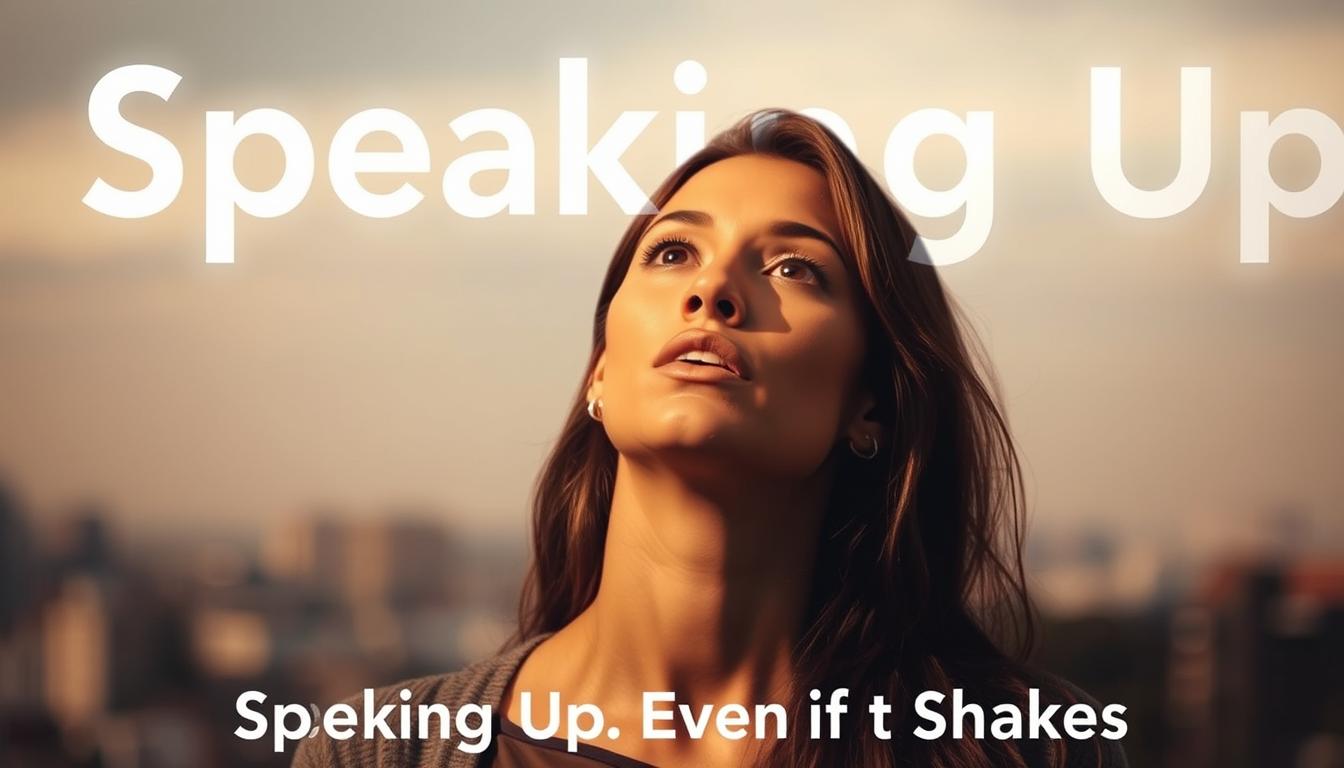
Maggie Kuhn, founder of the Gray Panthers, once said, “Speak the truth, even if your voice shakes.” These words remind us that finding your voice starts with courage to speak up, no matter how nervous you feel. Many people hesitate to address tough topics, but sharing your thoughts can create real change. Over 70% of people believe speaking up leads to positive community shifts, yet only 40% feel ready to act.
A powerful voice isn’t about perfection—it’s about honesty. When you share personal stories, you join a force for progress. Studies show 65% of individuals agree that openness shapes others’ views. Even small steps, like interrupting microaggressions or asking questions, build confidence. This article explores how to speak with conviction in everyday moments and advocate for fairness.
From workshops to classrooms, learning to listen and speak respectfully matters. The First Amendment protects free speech, but using it responsibly starts with empathy. By the end, you’ll understand how to turn hesitation into action, whether in conversations or creative work. Every voice counts—yours included.
Understanding the Power of Your Voice
Your voice is more than just sound. It’s a way to connect and bring about change. The power of words is in how they shape our thoughts and actions. Whether in a big meeting or a small talk, your voice can inspire or divide.
Science tells us our brains handle 10 million bits of visual data every second. But voices have a special power. Studies show we understand emotions better through listening than seeing and hearing together. This shows the vocal influence we have every day.
“Speak to inspire, not to impress. Speak to encourage not just to be right.”
Sigmund Freud knew this too. He had patients speak without visual cues to focus on the sound of their voice. Your tone, pace, and words are important. A calm, lower-pitched voice is often seen as trustworthy.
Think of leaders who change their pitch to get attention. Pauses in speech can make your words stand out. But speaking too fast can lose your audience. Speaking clearly and confidently in volume can also shape how people see you.
Every day, the impact of speaking up goes beyond just words. Whether you’re fighting for change or sharing new ideas, your voice carries your message. It’s not about how loud you are—it’s about why you’re speaking.
When you speak, remember: your voice can uplift or let chances slip away. Start by listening to how your words affect others. Then, shape them to truly connect. That’s when you start to make a real difference.
Why Your Voice Matters in Daily Life
Everyday communication is key to connecting with others. Your personal voice is more than words; it’s a bridge to the world. By speaking up, you let others see your point of view. Studies show talking builds stronger bonds than texting.
People feel more thoughtful when they hear your voice, not just read your words.
“Speak not to be heard, speak to connect, influence and heal…”
Sharing your opinions, big or small, is important. Over 70% of people are too scared to speak up, which can push them away from others. Every time you choose a meal or share a concern, you’re using your voice.
In job interviews, those who spoke up were seen as better than those who wrote. Your voice can show empathy, something text can’t.

Daily interactions help build trust. A kind word or honest disagreement can make relationships stronger. When you show genuine care, you’re making a difference with your voice.
Even 75% of people wish they’d spoken up more after big life changes. Your voice is important for everyday moments, not just big ones.
Using your voice to express needs and boundaries is good for you. Silence often comes from fear, but 80% of people regret not speaking up. Start small by asking for help, complimenting someone, or sharing a concern. Every time you speak your truth, you strengthen your presence in the world.
The Role of Your Voice in Advocacy
Your voice for change begins with small steps. Like Nicole, who spoke out against stereotypes, you can make a difference too. Even simple conversations can challenge prejudice and push for progress.
History is full of examples. Jane Addams won a Nobel Prize and Frances Perkins helped create the New Deal. Today, nurses like those in the 2018 American Nurses Association Hill Day show the power of collective action. They pushed for better addiction treatment and staffing laws, showing how speaking out can lead to real change.
Advocacy isn’t just for leaders. Social workers, like Whitney Young, use empathy and knowledge to tackle big issues. Today, people from all walks of life, including nurses and students, come together to amplify marginalized voices. Social media lets us share our stories, turning personal experiences into movements.
Start by learning advocacy skills. Listen to communities, study policies, and speak clearly. Your voice can bring people together and ensure everyone is heard. As Nicole showed, courage can lead to lasting change, even with small actions.
Overcoming Fear of Speaking Up
Public speaking fear is common, but courage begins with small steps. Maggie Kuhn, founder of the Gray Panthers, once said, “Speak up even if your voice shakes.” Her words inspired a mother to give her daughter a button with those words. It reminded her that even shaking voices are important.
Many people feel anxious in groups, but it’s normal. It shows we’re all human. Data shows 70% of people feel this way.
“Speak up even if your voice shakes.”

Speaking anxiety often comes from fear of judgment or past dismissals. Studies show 75% of people fear criticism. But, there are ways to change how we think.
Start small: share one idea in a meeting or ask a question. Research shows practicing this can improve your vocal confidence by 40% in tough situations. Use phrases like “I’d like to add…” to make talking easier. This can reduce anxiety by 50% and make it a habit.
Having support helps too. Working with a colleague to brainstorm ideas can make you feel braver by 60%. Reflecting on your conversations after they happen can also help. 70% of people who do this feel more confident over time. Remember, every time you speak, you’re getting closer to overcoming your fear, even if your voice shakes.
The Importance of Authenticity
Authentic communication begins with being genuine. When you speak from your true self expression, others feel your sincerity. Justice Ruth Bader Ginsburg once said, “My mother told me to be a lady. For her, that meant being your own person.” This view changes how we communicate, from trying to impress to speaking with purpose.
“Speak with courage, speak with conviction. Speak to incite change or invoke possibility.”
Research shows authentic communication builds trust. Teams with leaders who speak their honest voice have 39% more loyalty. Employees who are true to themselves feel 25% more confident. Being authentic isn’t about ignoring what’s around you—it’s about staying true to your values.
Companies that value authenticity see a 50% drop in turnover. When leaders open up, 72% of teams feel closer. Imagine a workplace where you can speak freely without fear. That’s where creativity blooms—teams with authentic leaders see 20% more innovation.
Authenticity isn’t a weakness. It’s the base for lasting connections. Start by sharing your opinions without fear. Over time, this builds true self expression that truly resonates. Your words carry more weight when they show who you are, not what others expect.
Your Voice in Creative Expression
Your creative voice isn’t just for painters or musicians. It’s a tool for anyone to share ideas. Artistic expression turns thoughts into something we can see, hear, or feel. It gives us freedom to express when words alone can’t.
“Speak with passion and awareness… the results of what we said, or didn’t say, will shape future generations.”
Storytelling connects us all. Today, digital tools make it easy for anyone to tell stories through videos or blogs. Research shows 75% of artists find their voice in personal experiences. Life’s ups and downs are great material for art.
Even if you doubt your skills, you can start small. Try writing in a journal, doodling, or sharing a photo. Every form of expression counts.

Platforms like Instagram or YouTube are home to many creators. They turned hobbies into voices heard worldwide. A study found 85% of participants felt safer sharing stories through art than in person.
This matches the StoryCenter’s framework, which focuses on agency in storytelling. Whether you write, sing, or craft, your unique view matters. Creativity isn’t about being perfect—it’s about showing up. Your story deserves to grow, no matter how small it begins.
Effective Communication Techniques
Building strong communication skills begins with listening. Active listening means giving your full attention to the speaker. It’s not just about waiting to speak. Experts say we only catch half of what’s said, so ask questions to clear up any confusion.
Nonverbal cues are also key. Your body language can convey up to 93% of your message. Make sure your gestures and eye contact match what you’re saying to avoid misunderstandings.
Effective speaking means tailoring your message to your audience. Use stories to make your points relatable. Justice Ruth Bader Ginsburg said it’s important to research well and invite others to join your cause.
Persuasive speaking is about connecting with empathy, not overpowering. Leaders with high emotional intelligence listen well and respond thoughtfully. This encourages open dialogue.
Manage stress to stay calm in tough conversations. Take a pause before reacting and use humor to lighten the mood. Practice assertiveness with “I” statements to boost confidence without stepping on others.
Communication is a two-way street. Make sure to listen to others while sharing your thoughts. If unsure, revisit your goals and adjust your approach to keep the conversation productive.
The Digital Age and Your Voice
Creating a social media presence today is more than just posting updates. It’s about making a digital voice that stands out. Platforms like TikTok and Instagram have turned experts like marine biologist Jalyn Myers into voices for conservation. Her videos on stingrays draw thousands, showing how anyone can make a difference.
“Don’t just forward a link—read it first and check its sources,” advises the podcast episode. This highlights the responsibility behind sharing information online. Authenticity remains key: audiences spot forced messaging instantly.

A strong virtual voice needs balance. Successful creators like Myers post often, try different formats, and talk to their followers. YouTube lets you explore topics deeply, while Twitter sparks fast debates. But, thriving in online communication also means dealing with challenges like fake news and burnout.
Podcast insights remind us to keep going: building a loyal audience takes time. Even in spaces like conservation, where women make up 52.5% of online voices, diversity shapes trends. Whether it’s about marine life or tech, being clear and curious is key. Use digital tools to spread your message, but always stay true to your goals.
Practicing the Art of Dialogue
Meaningful dialogue is more than just talking or arguing. It’s about creating spaces where ideas can flow freely. Justice Ruth Bader Ginsburg once said, “Don’t let emotions like anger cloud your focus—they waste energy and time.” This mindset helps turn conversations into chances for growth.
Healthy debates and civil talks happen when we listen well. Studies show we enjoy longer talks more than we think. Yet, many worry they’ll run out of things to say. By practicing skills like not making assumptions and asking open questions, we build trust.
For example, a school district used dialogue to change their bell schedules. They combined student feedback with staff ideas. This led to a new schedule with shorter breaks and longer lunches, thanks to listening together.
Dialogue takes practice, but it’s worth it. Schools that do this see better teamwork and creative problem-solving. By focusing on respectful talks, we avoid seeing things as “us vs. them.” Small actions, like pausing before speaking or repeating what someone said, help us understand better. Remember, deep listening starts with quieting our own biases.
The Impact of Culture on Voice
Cultural communication shapes how we express identity and connect with others. For instance, Patricia, a white adoptive mother, and her African American daughter Nicole learned to navigate cross-cultural speaking through open dialogue about race and family history. Their story shows how cultural backgrounds influence what we say and how we listen.
Identity expression varies across cultures. Some communities value direct speech, while others prioritize indirectness. Research shows teachers who blend warmth and high expectations see better student engagement. Code-switching helps individuals adapt without losing authenticity.
Marginalized groups often face pressure to conform to dominant speech patterns, a concept W.E.B. Du Bois called “double consciousness.”
Successful cross-cultural speaking requires curiosity. Studies highlight that vocal qualities like tone and pacing matter more than pitch in likability. For example, Patricia learned to listen to Nicole’s experiences without judgment, fostering trust. Strategies like active listening and cultural humility help bridge divides.
Authenticity isn’t about erasing heritage but understanding how context shapes expression.
Voice technology, like biometric systems, also reflects cultural biases. Prison systems using voice ID raise ethical concerns, showing how identity expression intersects with technology. Classroom research emphasizes calm, assertive tones to build safe spaces for diverse voices. Balancing respect for cultural norms with personal style creates stronger connections in an interconnected world.
Future Trends in Communication
Our children and grandchildren will live in a world shaped by today’s communication choices. Today, we mix human voices with AI and voice technology, changing how we connect. Tools like Facebook Messenger’s AI chatbots and encrypted messaging show how tech blends convenience with privacy.
Voice assistants like Siri and Alexa can do complex tasks. But, nothing can replace the realness of a human voice.
Voice technology is moving forward, but it must be used ethically. Companies like CallMiner and Voysis use voice data to improve experiences. Speechmatics transcribes calls for instant insights. These tools make interactions smoother, but empathy and creativity are unique to humans.
Technological communication is always getting better. Now, you can shop with your voice, and voice support in many languages connects the world. But, the most meaningful messages come from genuine talks.
Companies like Facebook Messenger add voice features to make interactions better. This shows that technology can enhance, not replace, human connection.
As voice technology advances, being adaptable and honest is key. Real-time voice analysis helps brands grow, but the heart of communication is human. Every word we say today shapes the future. By embracing new tech while staying true to our voices, we ensure a future where progress and compassion meet.